Costs & vendors
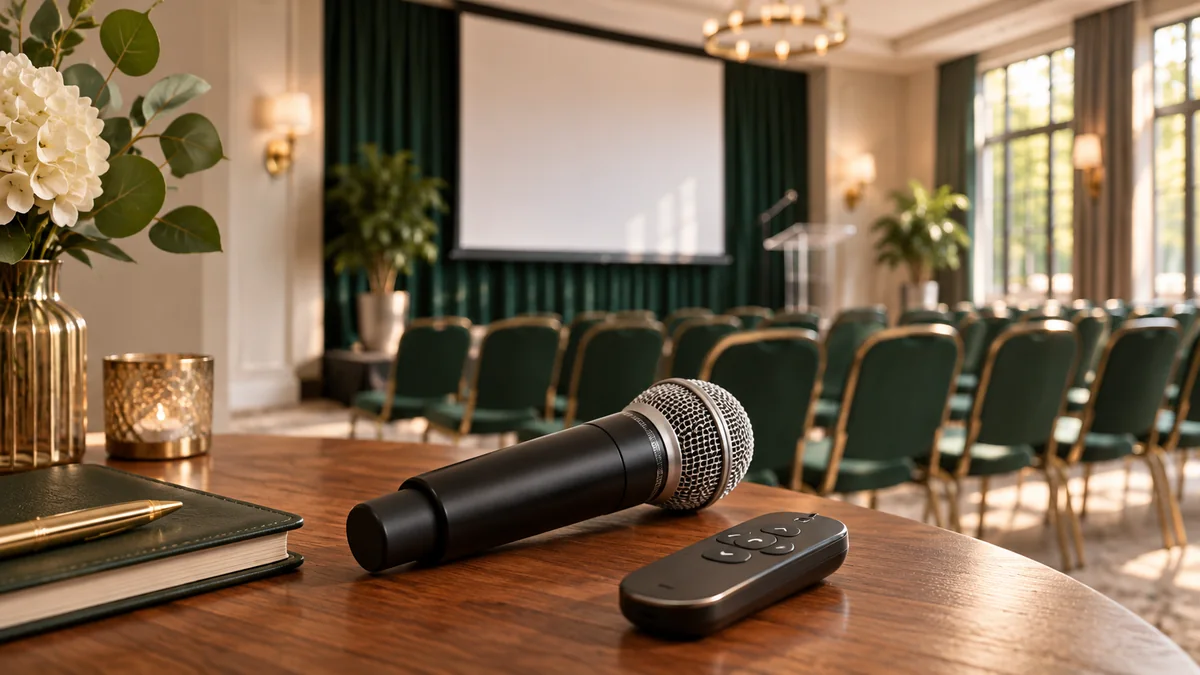
What AV equipment does your event actually need?
Turn the program into an equipment checklist, remove duplicate charges, and compare the full technical cost.
Read article
“How many people do we need working this event?” It sounds like a simple question, until you start listing everything that has to happen. Someone needs to check tickets. Someone needs to help the speakers. And somebody has to stay after the guests leave. Start with those jobs, then work out who you need and when.
Break the day into setup, arrival, the program, departure, and cleanup. List the jobs in each part, put a name beside each one, and add up the hours. You’ll quickly see where someone’s trying to be in two places at once, or where you’re paying for a full day when a shorter shift would do.
Two events with 200 guests can need very different teams. A seated dinner may need check-in, table service, guest support, stage help, and cleanup at the same time. A workshop in one room may have fewer moving parts. The venue layout, number of entrances, accessibility needs, service style, equipment, and schedule all matter.
Before you start asking people to help, write down what needs doing, where it happens, and the hours it needs coverage. Then check what the venue and vendors already provide. “I thought they were handling that” is a frustrating thing to hear when guests are waiting at the door.
Imagine a 200-person community fundraiser. The event runs from 5 p.m. to 9 p.m., but the working day begins at 2 p.m. and ends at 11 p.m. The planner expects to pay temporary event staff $22 per hour. That’s only an example rate, not a recommendation; use actual written quotes and employment costs for your area.
A quick plan might schedule seven people for nine hours each. That’s 63 hours, or $1,386. A time-and-role plan shows that some jobs are needed only during the busiest windows:
| Shift | People and jobs | Paid hours | Example cost |
|---|---|---|---|
| 2–11 p.m. | 2 event leads | 18 | $396 |
| 4–7 p.m. | 4 check-in and entry staff | 12 | $264 |
| 5–9 p.m. | 3 room and guest-support staff | 12 | $264 |
| 9–11 p.m. | 4 departure and teardown staff | 8 | $176 |
| Total | Staggered coverage | 50 | $1,100 |
That’s $286 less than the first estimate, but check the coverage before you call it a saving. Can people take their breaks? Who helps if the check-in line backs up? Who covers a position that can’t be left unattended? Add the people and hours you need to make the schedule work.
For each block, mark one person as the lead and one as backup. Add a handoff note when one shift replaces another: cash, keys, radios, guest issues, and unfinished tasks shouldn’t disappear between teams.
Your guests might be there for four hours, but your team’s working day can be much longer. Include arrival and briefing time, setup, handoffs, breaks, and cleanup. Ask staffing companies about minimum shift lengths, overtime rules, service charges, parking, meals, uniforms, and cancellation terms. If employees worked elsewhere for you during the same week, check their total hours before assuming every hour will be paid at the regular rate.
For covered U.S. employees, the U.S. Department of Labor says short rest periods are generally counted as paid work time, while a genuine meal period usually requires the employee to be completely relieved of duties. Under federal overtime rules, covered, nonexempt employees generally receive overtime after 40 hours in a workweek. A long event shift by itself doesn’t establish that federal threshold. State and local requirements may provide additional rules, so confirm what applies to your workers and location.
Volunteers aren’t a blank space in the plan. Give them clear duties, training, arrival times, a supervisor, breaks, and a backup. Don’t assign a volunteer to a safety-critical or specialized job unless the person is qualified and the arrangement is allowed.
For one event, a basic spreadsheet or printed grid is enough. List time blocks, roles, names, rate, hours, and the person covering each break. Share the final schedule with contact numbers and a simple “who makes the call?” note. Put those shifts beside the event-day run of show so setup, program cues, and teardown have an owner.
For client work, keep a reusable staffing template by event type. After each event, record where lines formed, when staff were idle, what ran late, and which handoffs failed. Use that evidence to adjust the next plan. A professional staffing recommendation should show both coverage and cost so the client understands what changes if a position is removed.
In the Crowd & Cost calculator, add the full expected staffing amount under “Entertainment & staff.” Include the paid hours and known staffing-company charges in that total. If the amount might change, test a second scenario with extra teardown time or another arrival worker.
Use the budget workbook to keep roles on separate lines so you can compare the plan with the final invoice. The hidden event costs guide can help you check other day-of charges, and the vendor contract guide has questions to use before accepting a staffing quote.
Turn the program into an equipment checklist, remove duplicate charges, and compare the full technical cost.
Read articleCount everyone who will eat, check the caterer's minimum, and know what your final meal guarantee could cost.
Read articleAsk better questions, compare the full price, and find savings you can put back into your event budget.
Read article